“Medical grade red light therapy” has no official definition. The FDA does not use it, and no standards body certifies it. When a seller uses the phrase, it can mean anything from “FDA-cleared for a specific use” to “brighter than a cheap panel.”
What does carry weight is specific and checkable: whether a device holds an FDA 510(k) clearance and for what use, whether it is merely registered and listed, and whether its electrical safety has been tested by a recognized lab. This guide shows you how to tell the difference.
Why “medical grade” is a marketing phrase
In the US, the FDA regulates medical devices based on their intended use, not on how powerful or well built they are. A device becomes a medical device when it is marketed to diagnose, treat, cure, mitigate or prevent a disease or condition.
That means two identical beds can sit in different regulatory positions. One maker may market it for general wellness and relaxation. Another may seek FDA clearance to market it for a specific medical use, such as temporary relief of minor muscle pain. The hardware might be similar. The legal status and the claims each company may make are not.
“Medical grade” blurs this. Some sellers use it to hint at FDA clearance they do not have. Others use it to describe build quality or output. Neither is a regulated meaning. Treat it as an invitation to ask better questions.
FDA 510(k) clearance vs registration and listing
These two terms get confused all the time, often on purpose.
| 510(k) cleared | Registered and listed | |
|---|---|---|
| What it is | FDA review of a premarket submission for one device and one intended use | The company registers its facility and lists its products with the FDA |
| Does the FDA review the device? | Yes, for substantial equivalence to a legally marketed device | No |
| What it lets the seller claim | The specific cleared indication, and nothing broader | Nothing about safety or effectiveness |
| How to verify | 510(k) database, number starts with K | Registration and listing database |
510(k) clearance
A 510(k) is a premarket notification. The maker shows the FDA that its device is “substantially equivalent” to a device already legally on the market, called the predicate. If the FDA agrees, it issues a clearance letter. The FDA explains the process on its Premarket Notification 510(k) page.
Clearance is not the same as approval. The FDA’s own consumer article Is It Really FDA Approved? explains that most devices are cleared, while approval (PMA) is reserved for higher-risk devices.
Registration and listing
Every company that makes or imports medical devices for the US must register its establishment and list its devices with the FDA each year. The FDA describes this on its Device Registration and Listing page.
Registration is an administrative step. FDA rules state plainly that registration and a registration number do not denote FDA approval, and that implying otherwise is misleading (21 CFR 807.39). A seller who writes “FDA registered” in a way that suggests the FDA vetted the device is stretching the truth.
What Class II means
The FDA sorts devices into three classes by risk. Class I is lowest risk, Class III is highest. The FDA’s Classify Your Medical Device page explains the system.
Most light therapy devices that make medical claims are Class II. They usually need a 510(k) before they can be marketed for that medical use. Examples of real FDA product codes for light-based devices, all Class II:
- OHS: light based over-the-counter wrinkle reduction
- NHN: non-thermal light instrument for adjunctive use in pain therapy
- ILY: infrared lamp for therapeutic heating
- OAP: laser comb for hair
“Class II” on its own tells you the risk category of a device type. It does not tell you that a particular device has been cleared.
What a clearance actually covers
A 510(k) clearance covers one device, one company and one set of indications for use. It does not cover:
- Other models from the same brand.
- Uses not written in the clearance letter.
- Red light therapy as a whole.
If a bed is cleared for “temporary relief of minor muscle and joint pain,” that is what it may be marketed for. It is not cleared for weight loss, collagen, sleep, mood or anything else unless those uses appear in the clearance. When a brand shows one clearance and then lists a dozen benefits, the clearance does not back the rest of the list.
How to check a device in the FDA database
This takes about five minutes.
- Ask for the K number. Every 510(k) has a number starting with “K” followed by six digits. A seller with a clearance can give it to you on request.
- Search the database. Open the FDA 510(k) Premarket Notification database and enter the number, or search by applicant name or device name.
- Match the company and device. Check that the applicant name and device name match what you are being sold. A clearance for a different company’s panel does not cover a rebranded bed.
- Read the indications for use. Open the summary or statement document and read exactly what the device is cleared for.
- Check listing, too. You can confirm the company’s registration and device listing in the FDA Establishment Registration and Device Listing database. Remember that a listing alone is not a clearance.
Electrical safety: IEC 60601, UL and ETL
FDA status is one question. Whether the bed is safe to plug into your wall and put a guest inside is another. For a commercial bed that draws around 5.5 kW, this matters as much as any clearance.
- IEC 60601-1 is the international safety standard for medical electrical equipment. Its part IEC 60601-2-57 covers non-laser light source equipment for therapeutic, diagnostic, monitoring and cosmetic use. Devices seeking FDA clearance often cite these standards. The FDA keeps a recognized consensus standards database you can search.
- UL, ETL and CSA marks show that a Nationally Recognized Testing Laboratory (NRTL) has tested the product to a US safety standard. Many local inspectors and landlords expect a listing mark on fixed commercial equipment.
- IEC 62471 covers the photobiological safety of lamps and LED systems, including eye and skin exposure limits.
Ask any seller which standards the bed was tested to, by which lab, and for a copy of the report or certificate. “CE” on its own is a European self-declaration in many product categories and is not a US listing.
Red flags in marketing
Watch for these when you compare brands:
- “FDA approved” for a light therapy bed. Almost no light devices are approved. They are cleared, or they are not.
- “FDA registered” presented as a quality badge. Registration is administrative and does not mean the FDA reviewed the device.
- A K number that belongs to a different device or company. Always check the applicant name.
- Long lists of disease claims. Claims to treat depression, cancer, diabetes or similar conditions are not backed by any light therapy clearance we know of.
- Irradiance with no distance or method. “200 mW/cm²” means little without the measurement distance and meter. See red light therapy wavelengths.
- Fake reviews, invented clinic partners or unnamed “doctors recommend.”
- “Medical grade” with no documents behind it.
A trustworthy seller hands you specs, test reports and regulatory documents without being pushed. For a neutral look at who sells what, see our red light therapy bed brands overview.
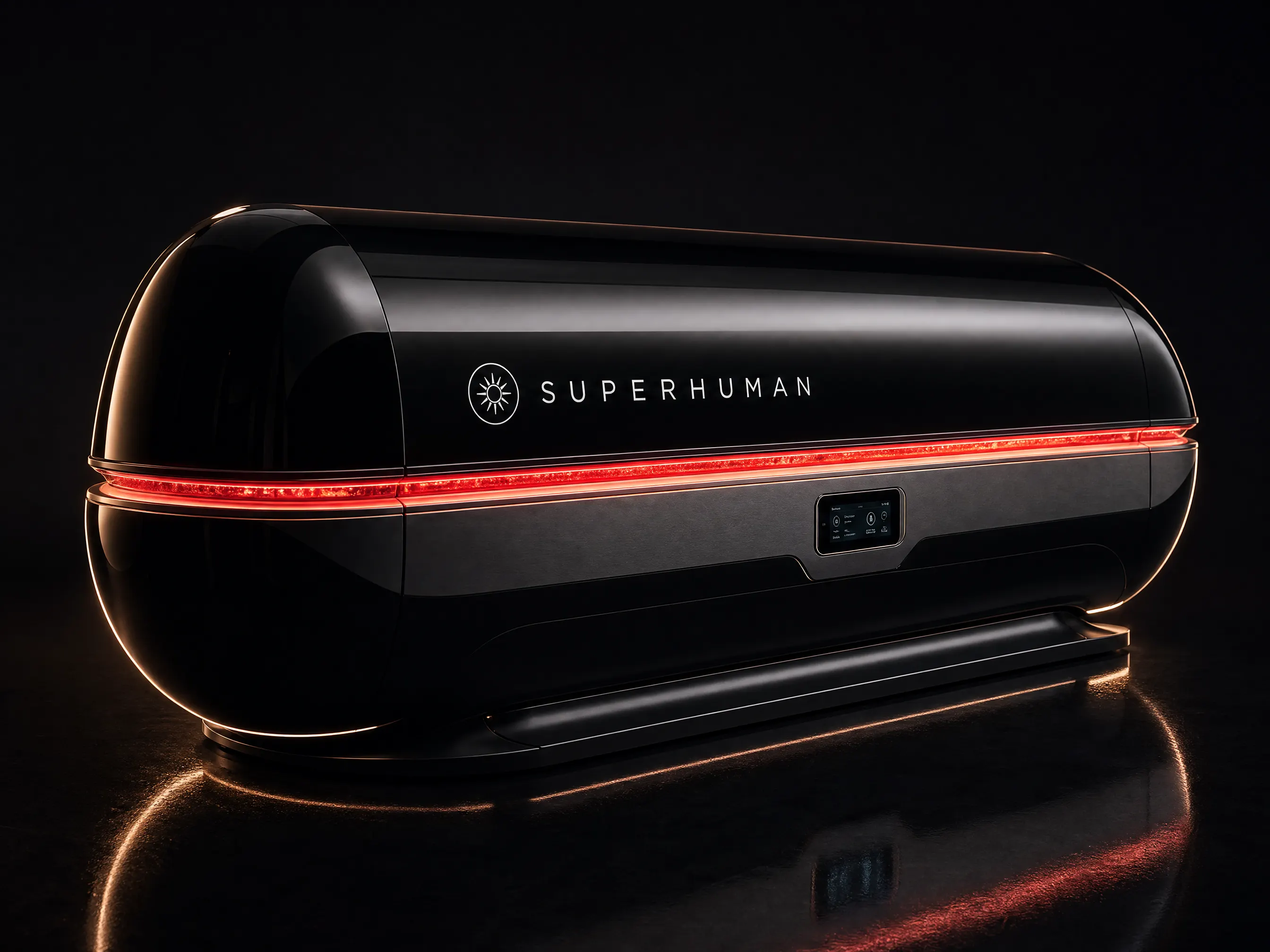
Superhuman Light R1
Full-body red light, built for a full day of bookings.
- Format
- Full-body bed
- Wavelengths
- 5 · 630–940 nm
- Session
- 10–20 min
- Power
- 240 V · 40 A
Questions to ask before you buy
Use this checklist in every sales call:
- Does this exact device hold an FDA 510(k) clearance? What is the K number and the cleared indication?
- If not cleared, how is the device marketed, and what claims may I make to guests?
- Which electrical safety standards was it tested to, and by which lab? Can I see the certificate?
- What is the irradiance, at what distance, measured with what meter and by whom?
- What is the warranty, and who services it locally?
The answers matter more than any label. To see how we answer them for our own bed, visit the Superhuman Light R1 product page or contact us for a written quote.