Red light therapy is the use of low-level red and near-infrared light on the skin, usually from LEDs or low-power lasers. Scientists call it photobiomodulation (PBM). The idea is that certain wavelengths of light are absorbed by cells and change how they behave, without heating or burning the tissue.
It is not a tanning treatment and it uses no ultraviolet light. Research on it is active and the results are mixed: some specific devices are FDA-cleared for specific uses, while many popular claims are still unproven. This guide explains the basics in plain words.
How red light therapy works
The leading explanation starts in the mitochondria, the small structures inside cells that turn food and oxygen into usable energy (a molecule called ATP).
One enzyme in the mitochondria, cytochrome c oxidase, absorbs light in the red and near-infrared range. Researchers propose that when it absorbs this light, a few things happen:
- The enzyme works more efficiently, and cells may produce more ATP.
- Nitric oxide, which can block the enzyme, is released.
- Short bursts of signalling molecules switch on genes linked to repair and inflammation control.
This model is described in reviews by Hamblin and colleagues at Harvard Medical School, including Proposed Mechanisms of Photobiomodulation or Low-Level Light Therapy and Mechanisms and Mitochondrial Redox Signaling in Photobiomodulation. It is a working theory, not a settled fact. Other light-sensitive molecules, such as ion channels and water, may also play a part.
One more principle matters for anyone buying a device: more light is not always better. PBM seems to follow a “biphasic” dose response. Too little light does nothing, a moderate dose can have an effect, and too much can cancel the effect (Huang et al., Dose Response, 2009).
Red vs near-infrared light
Red light therapy devices use two bands of light.
| Red | Near-infrared (NIR) | |
|---|---|---|
| Common wavelengths | 630, 660 nm | 810, 850, 940 nm |
| Visible? | Yes, deep red glow | No, or a faint dull red |
| Depth | Mostly skin surface layers | Travels deeper into tissue |
| Typical focus | Skin appearance routines | Muscle and joint recovery routines |
Many commercial devices combine both. The Superhuman Light R1, for example, uses five wavelengths: 630, 660, 810, 850 and 940 nm. For a deeper look at wavelengths, power and dose, read our guide to red light therapy wavelengths.
Types of devices
Red light therapy comes in many formats. The price gap between them is large, because two markets (home and commercial) share one vocabulary.
| Device | What it covers | Typical price |
|---|---|---|
| Masks and handhelds | Face or a small area | Under $100 to about $1,000 |
| Consumer panels | One area at a time, standing in front | $99–1,800 |
| Home beds | Full body, lighter duty | $1,400–22,000 |
| Commercial entry beds | Full body, built for daily bookings | $15,000–30,000 |
| Premium commercial beds and pods | Full body, high output, extra features | $60,000–150,000 |
| Clinical lasers | Small, targeted areas, used by clinicians | Varies widely |
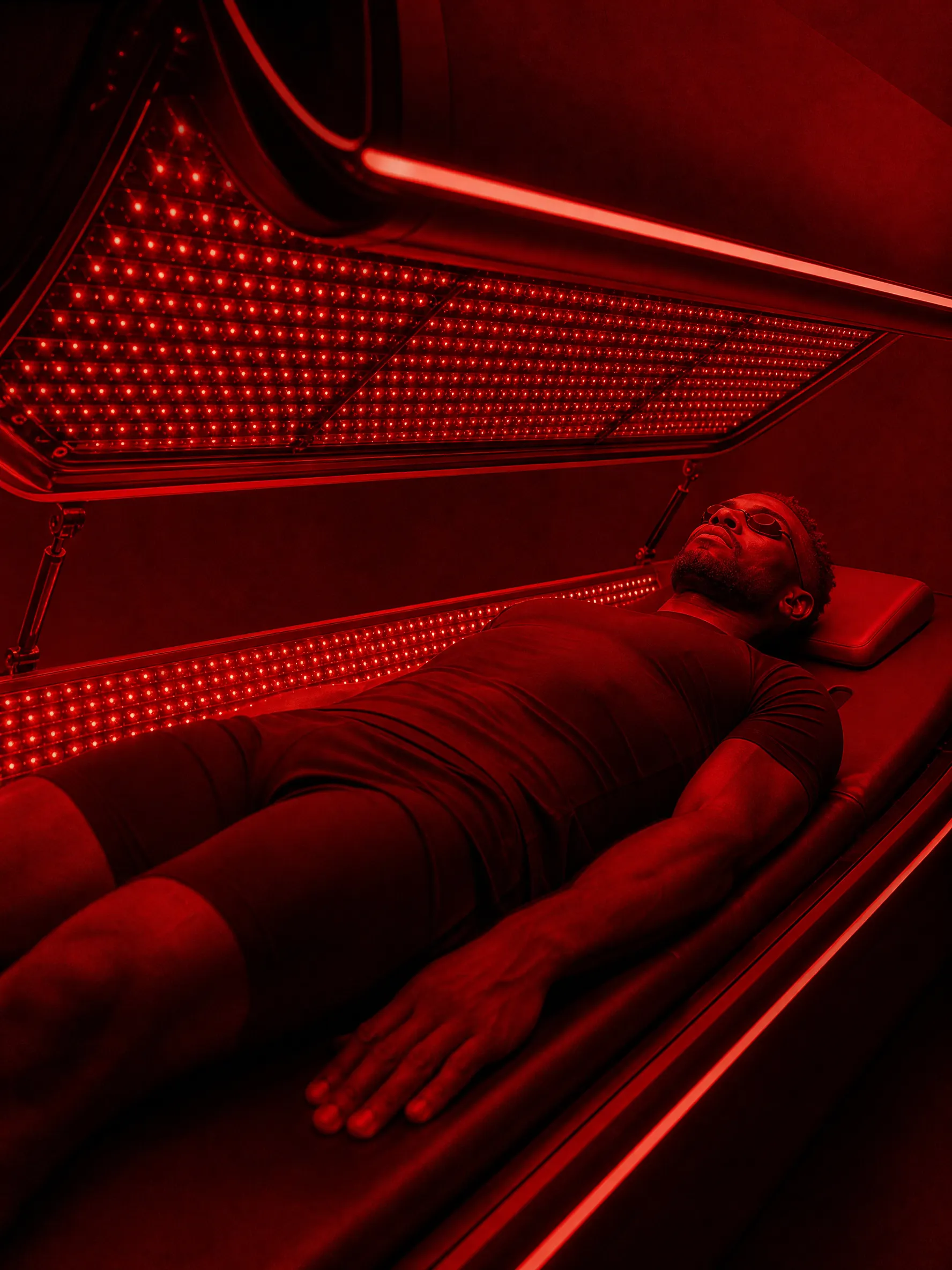
Panels are flat boards of LEDs. You stand or sit in front of them and treat one side of the body at a time. Beds surround the body. In a clamshell bed like the R1, LEDs line both the canopy and the base, so front and back are treated in the same session. Masks target the face. Lasers deliver a narrow beam and are mostly used in clinics for small areas.
If you are deciding between formats for a business, our bed vs panel comparison walks through the trade-offs, and the commercial red light therapy beds guide covers what to look for in a bed.
What the research says
Photobiomodulation has thousands of published studies. Quality varies a lot. Many studies are small, use different wavelengths and doses, or are run by device makers. That makes it hard to compare results or draw firm conclusions. A 2018 review in the Journal of Biomedical Optics called the field’s light parameters a “dive into complexity” for exactly this reason (Zein et al., 2018).
Here is a fair summary of where the evidence stands in some common areas.
Skin appearance
A controlled trial found that red and near-infrared light improved self-reported skin satisfaction and measured skin roughness and collagen density compared with controls (Wunsch and Matuschka, 2014). A systematic review of randomized trials of LEDs in dermatology found some supportive evidence for skin rejuvenation and other uses, while noting that more high-quality trials are needed (Jagdeo et al., 2018). The FDA has a device category called “light based over-the-counter wrinkle reduction” (product code OHS), and specific devices have been cleared under it.
Exercise and recovery
A systematic review and meta-analysis found that light applied before exercise improved some performance and recovery markers in the studies it pooled (Leal-Junior et al., 2015). A later review discussed PBM as a possible aid to sports performance (Ferraresi et al., 2016). Most of this work used targeted devices on specific muscles, not full-body beds, so results do not transfer directly.
Pain and hair
Some specific devices hold FDA clearance for adjunctive use in pain therapy (product code NHN) and for hair growth with laser combs and caps (product code OAP). A clearance applies to that device and that use only. It does not mean red light in general treats pain or hair loss.
The honest bottom line
The science is promising in some areas and thin in others. No one should promise guests that red light treats, cures or heals a condition. The safe, accurate framing is a wellness, recovery and skin-appearance routine backed by active research.
Is red light therapy safe?
Red light therapy is generally well tolerated in studies, and it has no UV exposure. It still needs care. Bright LEDs and invisible near-infrared light call for eye protection. High-output beds produce warmth. Some medications and conditions call for a check with a physician first. Our red light therapy safety guide covers screening, eyewear, session limits and cleaning for operators.
What businesses offer it for
Commercial red light beds show up in many kinds of venues. Each frames the service a little differently.
- Day spas add it as a stand-alone relaxation session or an add-on to facials and massage. See red light therapy beds for spas.
- Med spas pair it with aesthetic treatments under a medical director’s protocols. See red light therapy beds for med spas.
- Tanning salons offer it as a UV-free option in the same kind of room as a tanning bed. See red light therapy beds for tanning salons.
- Gyms and recovery studios sell it next to cold plunge, sauna and compression as part of a recovery membership.
- Wellness and longevity centers bundle it into memberships with other routines.
Sessions typically sell for $20–100. Because a bed has no bulbs to replace and uses little electricity, the main costs are the bed itself and the staff time. Our red light therapy bed cost guide and ROI calculator show the numbers.
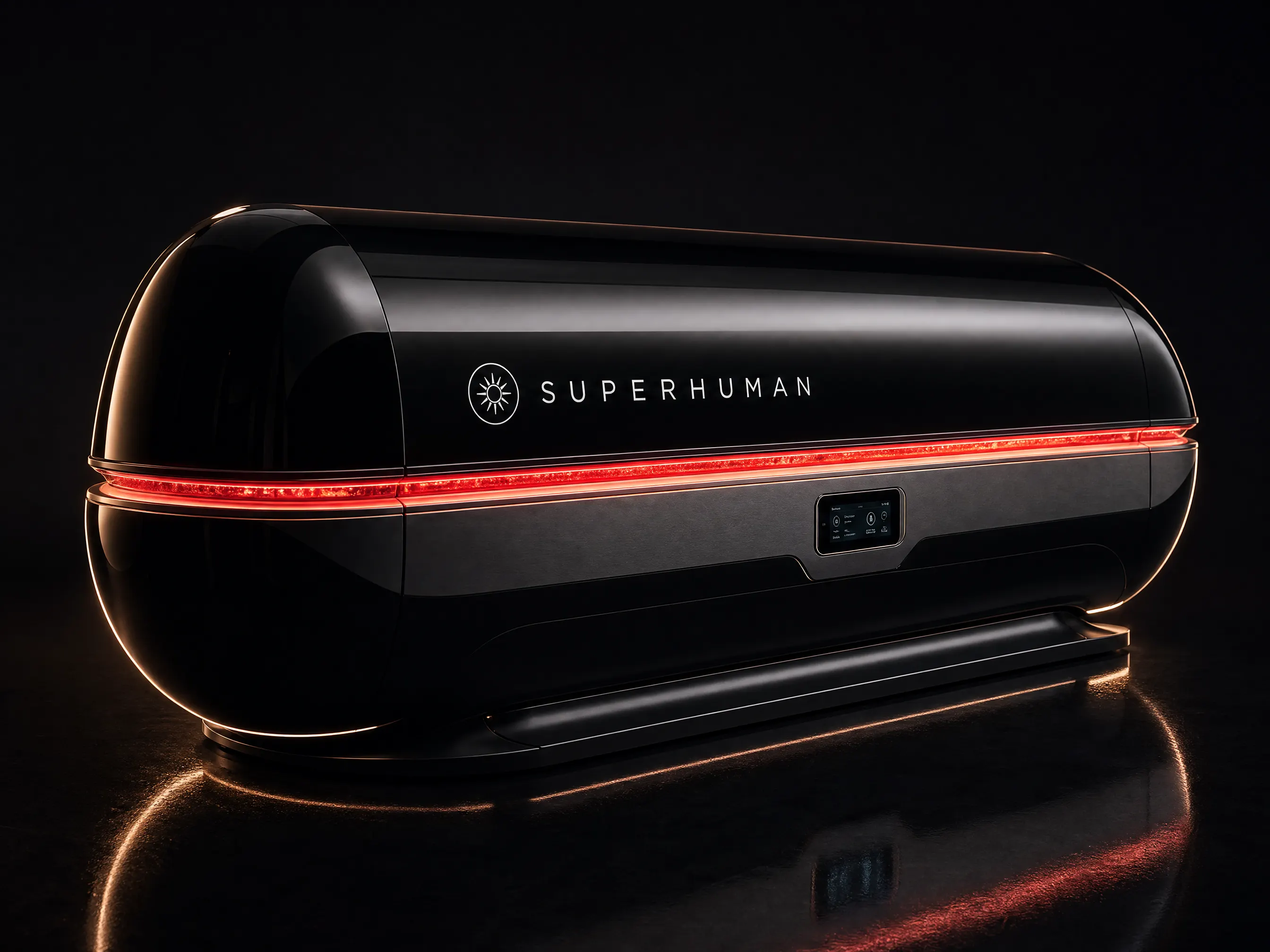
Superhuman Light R1
Full-body red light, built for a full day of bookings.
- Format
- Full-body bed
- Wavelengths
- 5 · 630–940 nm
- Session
- 10–20 min
- Power
- 240 V · 40 A
Key terms
- Photobiomodulation (PBM): the scientific name for red light therapy.
- LLLT: low-level laser (or light) therapy, an older name for the same thing.
- Wavelength (nm): the color of light, measured in nanometres.
- Irradiance (mW/cm²): how much light power lands on each square centimetre.
- Dose or fluence (J/cm²): total light energy delivered over a session.
- 510(k) clearance: an FDA decision that a specific device is substantially equivalent to a legally marketed device, for a specific intended use.
To see how a full-body commercial bed is built and priced, visit the Superhuman Light R1 product page.