Red light therapy and infrared saunas are different services. Red light therapy uses LEDs at narrow red and near-infrared wavelengths (about 630–940 nm) to deliver light to the skin and tissue, with little heating. An infrared sauna uses heaters to raise body temperature and cause sweating, at about 43–60 °C (110–140 °F). One is a light session, the other is a heat session, and they fit a business in different ways.
Side-by-side comparison
| Factor | Red light therapy bed | Infrared sauna |
|---|---|---|
| Main effect | Light absorbed by cells (photobiomodulation) | Heat: raised skin and core temperature, sweating |
| Light source | LEDs at set wavelengths, e.g. 630, 660, 810, 850, 940 nm | Carbon, ceramic or similar infrared heaters, broad spectrum |
| Room temperature | Room temperature; bed warms slightly | About 43–60 °C (110–140 °F) cabin |
| Session length | 10–20 min | Longer, plus cool-down time |
| Sweat and shower | No sweat, no shower needed | Heavy sweating; shower and towels expected |
| Clothing | Guest can undress for full-body exposure or wear minimal clothing | Swimwear or towel |
| Guests per unit per hour | Up to 3 (R1, with changeover) | Usually 1–2 per cabin, cabin may seat several |
| Utilities | Electrical circuit; room ventilation or AC | Electrical circuit; ventilation; access to showers |
| Cleaning | Wipe down acrylic between guests | Towels, benches, floor, shower area |
| Best known for | Wellness, recovery, skin-appearance routines | Relaxation, heat exposure, recovery routines |
Different mechanisms
Red light therapy: light, not heat
Red light therapy is also called photobiomodulation (PBM). The idea is that cells absorb specific wavelengths of light. Research points to mitochondria, in particular an enzyme called cytochrome c oxidase, as a main target. Researchers report a biphasic dose response: too little light may do little, and too much can reduce the effect (Hamblin, AIMS Biophysics, 2017).
That is why wavelength and dose matter. Red light at 630–670 nm is absorbed mostly near the skin surface. Near-infrared at 810–940 nm reaches deeper. Our wavelengths guide explains the bands.
The evidence is mixed. Some specific LED devices hold FDA clearance for narrow uses, such as temporary relief of minor muscle and joint pain. Red light in general is not proven to treat any disease. Businesses should present it as a wellness, recovery or skin-appearance routine. Our what is red light therapy guide covers what the research does and does not show.
Infrared sauna: heat first
An infrared sauna warms the body directly with infrared heaters rather than heating the air to very high levels. Mayo Clinic says infrared saunas run at about 110–140 °F (43–60 °C), compared with 150–195 °F (65–90 °C) for a traditional sauna. That makes them easier for people who dislike intense heat.
Most of the reported effects of sauna use come from heat stress: higher heart rate, sweating and raised skin temperature. A 2018 systematic review of regular dry sauna bathing found 40 clinical studies with 3,855 participants. Only 13 were randomized controlled trials and most were small. The authors concluded that regular dry sauna bathing “has potential health benefits” and that more and higher-quality data are needed (Hussain and Cohen, 2018). Mayo Clinic also notes that larger, more exact studies are needed.
“Infrared” does not mean the same thing
Both use the word infrared, which causes confusion. A red light bed’s near-infrared LEDs emit in narrow bands, for example 810, 850 or 940 nm. Sauna heaters emit a broad spread of infrared, much of it at longer wavelengths that mostly warm the skin. The same word covers two very different outputs.
Session length and throughput
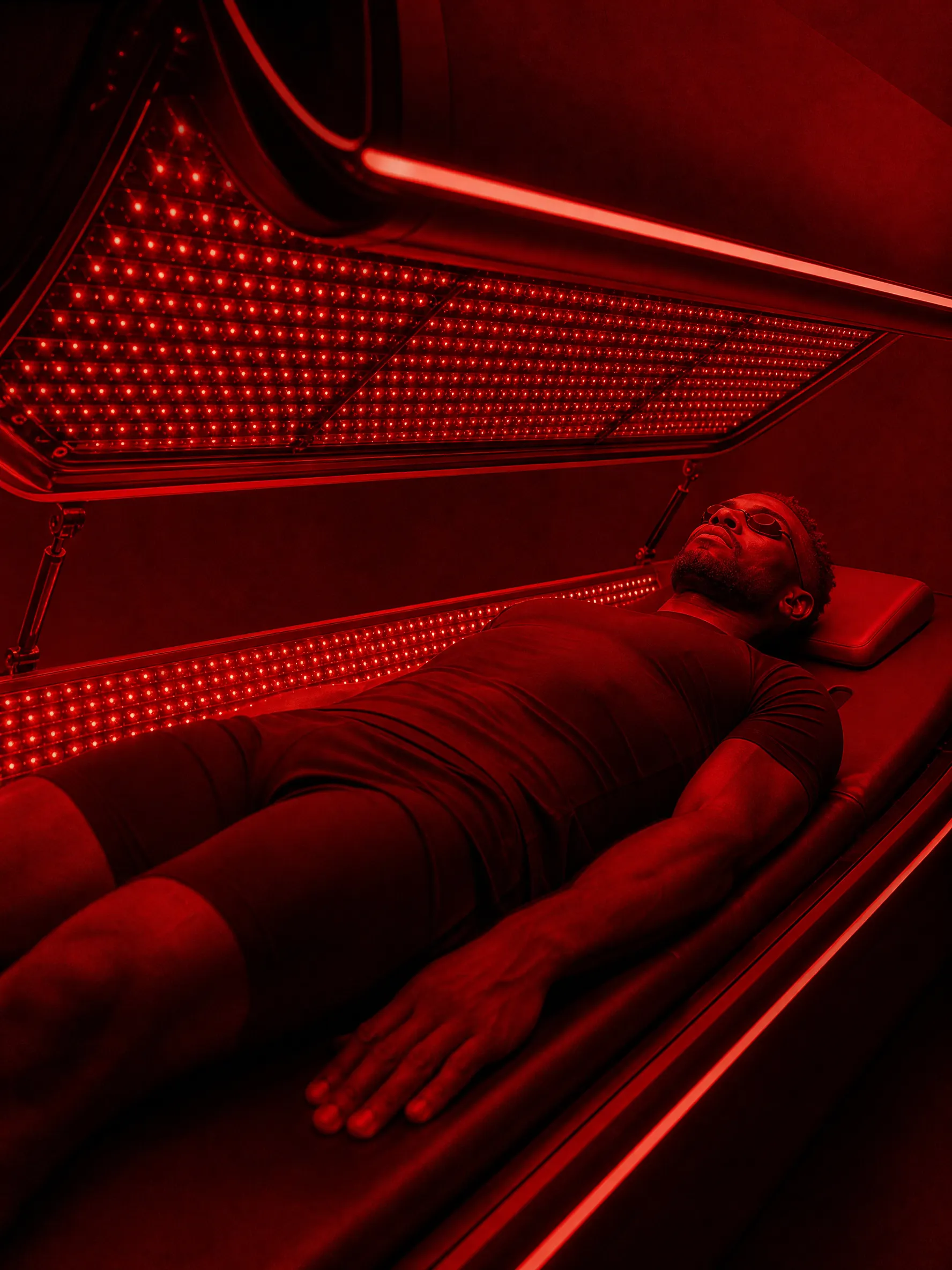
A red light bed session is short and fixed. The Superhuman Light R1 runs 10–20 minute sessions on presets, treats front and back at once, and serves up to 3 guests an hour including changeover.
A sauna session is longer. Guests need time to warm up, stay in the heat, cool down and shower. Even when a cabin seats more than one person, most businesses book one party per slot.
For a business, that changes the math. A red light bed can turn over quickly with little staff help. A sauna often suits longer, higher-priced bookings or membership access.
Business fit
Where red light beds fit well
- Day spas and med spas. A dry, quiet, short session that fits between facials and body treatments. See our spa guide.
- Tanning salons. Similar room size and power to a high-output tanning bed, with no UV. See red light bed vs tanning bed.
- Gyms and recovery studios. Guests can use it after a workout without a second shower.
- Clinics and longevity centers. Precise session presets and usage logs.
Where infrared saunas fit well
- Gyms and studios that already have showers and locker rooms.
- Wellness centers selling longer relaxation visits or memberships.
- Recovery studios pairing heat with cold plunge.
Space and utilities
The R1 measures 2.2 × 1.2 m and needs a room of about 3.0 × 2.2 m with ventilation or AC. It runs on 208–240 V single-phase on a dedicated 40 A circuit, about 5.5 kW, and costs about $60–120 a month in electricity at typical use. No plumbing needed.
A commercial infrared sauna also needs a dedicated electrical supply and ventilation. The bigger difference is the extras: showers, towels, laundry and more cleaning time. Size, power and price vary widely by maker and cabin size, so get specs from the vendor.
Pairing both
Many wellness businesses offer both and sell them as a pair. Common approaches:
- Separate services, one visit. Guests book a sauna slot and a red light slot back to back.
- Membership tiers. A base tier includes one service; a higher tier includes both.
- Order of use. There is no agreed best order. Some facilities put the dry red light session first so guests do not lie on the bed after sweating. Others put it after the shower. Choose what works for your cleaning routine.
Keep safety simple. Guests should drink water, wear protective eyewear on the light bed and avoid either service if they feel unwell. Anyone who is pregnant, has a heart condition, has a light-sensitive condition or takes photosensitizing medication should ask their doctor first. Our safety guide covers this in more detail.
Which should you add first?
If you have no showers, limited space or want short, high-turnover sessions, start with a red light bed. If you already have locker rooms and sell long visits or memberships, a sauna may fit your model. If you have room for both, they sell well together because they feel different to the guest.
The Superhuman Light R1 costs $29,900, or about $620 a month on a 60-month lease (OAC), with delivery, installation, training and a 2-year warranty included. See the commercial beds overview to compare formats.
Sources
- Mayo Clinic, Do infrared saunas have any health benefits?: https://www.mayoclinic.org/healthy-lifestyle/consumer-health/expert-answers/infrared-sauna/faq-20057954
- Hussain J, Cohen M. Clinical Effects of Regular Dry Sauna Bathing: A Systematic Review. Evid Based Complement Alternat Med. 2018: https://pmc.ncbi.nlm.nih.gov/articles/PMC5941775/
- Hamblin MR. Mechanisms and applications of the anti-inflammatory effects of photobiomodulation. AIMS Biophysics. 2017: http://www.aimspress.com/article/10.3934/biophy.2017.3.337