A commercial red light therapy bed costs very little to run. A 20-minute session on the Superhuman Light R1 uses just under 2 kWh, or about $0.25 to $0.40 in electricity. With sessions selling for $20 to $100, the return depends almost entirely on how many sessions you sell, not on running costs.
This page walks through cost per session, the ways operators sell red light, and three illustrative break-even examples. Then you can model your own numbers with the calculator.
Cost per session
Here is the math for the R1, which draws about 5.5 kW.
| Item | Per session | Notes |
|---|---|---|
| Electricity | $0.25–0.40 | 5.5 kW × 20 min ≈ 1.8 kWh at $0.13–0.20/kWh |
| Cleaning supplies | About $0.50–1.50 | Acrylic-safe disinfectant and wipes |
| Eyewear | Pennies | Reusable goggles, cleaned between guests |
| Lamp replacement | $0 | LEDs rated 50,000+ hours, no bulbs to replace |
| Direct cost | About $1–2 | Before staff time, rent and lease |
At busy commercial use, electricity runs about $60 to $120 a month. That is roughly 200 to 400 sessions.
Your bigger fixed costs are rent for the room, staff time for check-in and cleaning, and any lease or loan payment. The R1 lease is about $620 a month over 60 months, on approved credit.
Capacity
With changeover, one R1 serves up to 3 guests an hour. Open 10 hours a day, 26 days a month, that is a ceiling of about 780 sessions a month. No business runs at 100%. Most new services start at a small fraction of that and grow. The point is that one bed has plenty of headroom.
Revenue models
Operators sell red light in four main ways. Most use two or three at once.
Single sessions
The simplest offer. Market prices run from $20 to $100 per session. Day spas and med spas tend to sit at the higher end. Gyms and tanning salons tend to sit lower and sell on volume.
Packages
Prepaid bundles, such as 10 sessions for $350 ($35 each). Packages bring cash in up front and get guests into a routine. Set an expiry date so bundles do not sit unused for years.
Memberships
A monthly fee for a set number of sessions, such as $149 a month for up to 8 sessions. Memberships give you steady, predictable revenue. Illustrative example: 30 members at $149 is $4,470 a month. If each member uses 5 sessions, that is 150 sessions, well within one bed’s capacity.
Add-ons
A red light session added to another service, such as a facial, massage, body wrap or post-workout recovery slot. Add-ons are often priced at $20 to $40 on top of the main service. They raise the average ticket without new customer acquisition. For ideas by business type, see red light for spas, med spas and tanning salons.
Illustrative break-even examples
These examples are illustrative, not forecasts. They use the R1 purchase price of $29,900 and a direct cost of about $1.50 per session. They do not include rent, staff wages or marketing, which vary a lot by business.
| Slow start | Steady | Busy | |
|---|---|---|---|
| Price per session | $35 | $45 | $60 |
| Sessions per day | 2 | 4 | 6 |
| Days open per month | 26 | 26 | 26 |
| Sessions per month | 52 | 104 | 156 |
| Revenue per month | $1,820 | $4,680 | $9,360 |
| Direct costs per month | About $80 | About $160 | About $230 |
| Contribution per month | About $1,740 | About $4,520 | About $9,130 |
| Payback on $29,900 | About 17 months | About 7 months | About 3–4 months |
A common market example uses a 5-day week: $60 per session × 6 sessions a day × 260 days a year is about $93,600 a year in revenue.
With a lease instead
If you lease at about $620 a month, subtract that from monthly contribution:
- Slow start: about $1,120 a month left over.
- Steady: about $3,900 a month.
- Busy: about $8,500 a month.
At $40 a session, about 16 sessions a month cover the lease. That is fewer than four a week. See financing for terms.
Plan for a ramp-up
Few new services start busy. A realistic plan assumes slow months at the start and builds from there.
- Months 1–2: launch to existing clients. Offer an intro session or a first-visit package. Expect a handful of sessions a day at best.
- Months 3–6: convert repeat guests to packages and memberships. This is where revenue starts to steady.
- Month 6 onward: add red light to other services as an add-on, and run local marketing to bring in new guests.
Build your budget on the slow-start column, not the busy one. If a lease payment is covered at 16 sessions a month, you have a safe floor even in a quiet first quarter.
A worked example
Illustrative only. A day spa with an unused room adds an R1 on lease at about $620 a month. It sells single sessions at $45, a 10-pack at $380 and a $159 membership for up to 8 sessions a month.
By month six it has 20 members, sells two 10-packs a month and about 40 single sessions. That is about $3,180 from memberships, $760 from packages and $1,800 from singles, or about $5,740 a month. If members use 5 sessions each, total volume is about 160 sessions a month, roughly 6 a day. Direct costs are about $240 and the lease is $620, leaving about $4,880 before staff time and rent.
These numbers are an example to test your own plan against, not a promise. Demand in your area, your pricing and your marketing decide the real result.
What moves the numbers most
- Bookings per day. Going from 2 to 4 sessions a day more than doubles contribution. Marketing to existing clients is the fastest lever.
- Price. A $10 change per session is worth $1,000+ a month at 4 sessions a day.
- Memberships. They smooth out slow weeks and make revenue predictable.
- Attach rate on add-ons. If one in five facial guests adds a $25 red light session, that is new revenue with no new customers.
- Room and staffing. A bed in an unused room with self check-in costs far less to run than one that ties up a therapist.
Costs you should not forget: the one-time electrical circuit, cooling for the room and insurance. Our red light therapy bed cost guide lists them.
ROI calculator
Enter your own price, bookings and costs to see monthly revenue and payback.
- Monthly session revenue
- —
- Running cost per month
- —
- Other monthly costs
- —
- Monthly profit before financing
- —
- bed price
- —
An estimate, before tax and financing costs. Running cost is the model’s typical monthly electricity use.
The bed behind the numbers
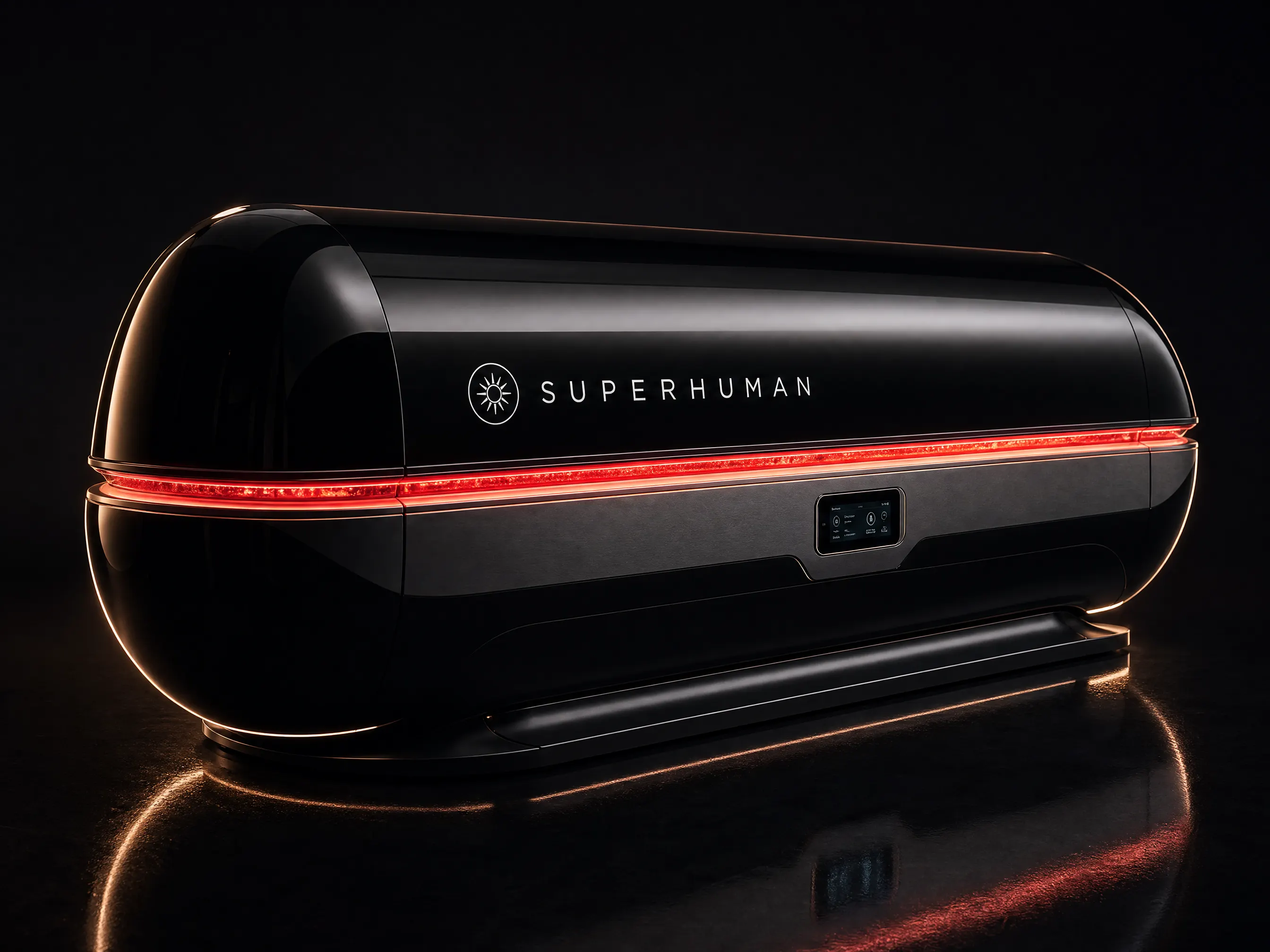
Superhuman Light R1
Full-body red light, built for a full day of bookings.
- Format
- Full-body bed
- Wavelengths
- 5 · 630–940 nm
- Session
- 10–20 min
- Power
- 240 V · 40 A
The Superhuman Light R1 is a commercial clamshell bed with 5 wavelengths (630 to 940 nm), about 36,000 LEDs and no UV. Sessions run 10 to 20 minutes, up to 3 guests an hour. It costs $29,900, or about $620 a month on a 60-month lease (OAC). Delivery, install, training, eyewear and a 2-year parts and labour warranty are included.
See full R1 specs or ask for a written quote with your room details.